
Creatine is the most researched sports supplement on the planet, and one of the very few that lives up to the hype. If you train with intent, it belongs in your stack. Here’s what the science actually says, how to take it, and why it matters for your prep.
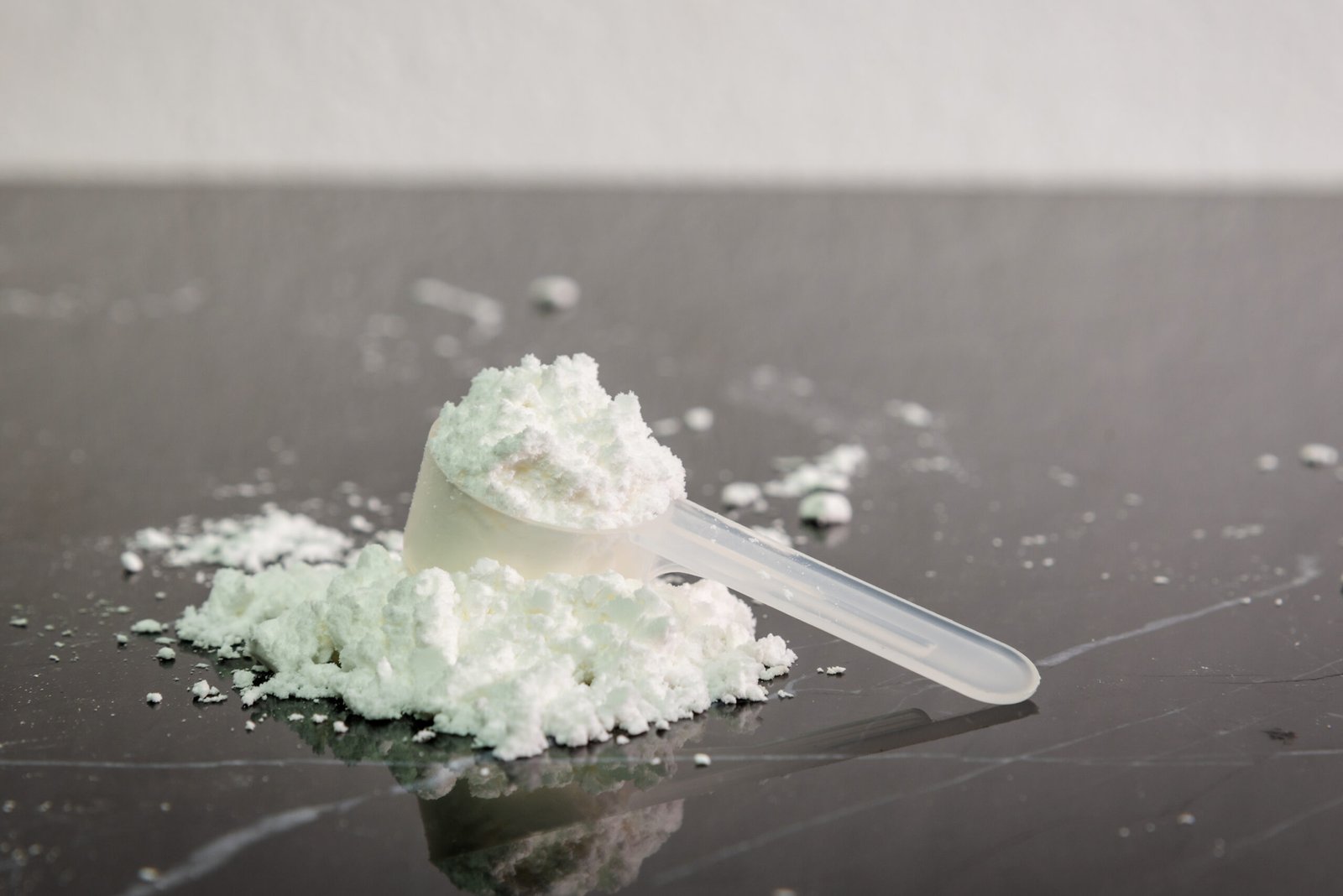
What Creatine Is
Creatine is a compound your body already makes from the amino acids arginine, glycine and methionine in the liver and kidneys, then stores mostly in muscle as phosphocreatine. You also get it from food — primarily red meat and fish. Inside the muscle, phosphocreatine rapidly regenerates ATP, the energy currency for short, hard efforts like a heavy set or a sprint. Supplementing raises those stores so you can do a little more work, more often.
Does It Actually Build Muscle?
Yes — with one condition: you have to train. A peer-reviewed scoping review of randomized trials from 2012 to 2021 found creatine reliably increased strength, lean mass and muscle growth in healthy young people, trained and untrained alike, as long as they were putting in sufficient training. Without that training stimulus, the effect largely disappears. Creatine multiplies the work you do; it doesn’t replace it.
More phosphocreatine means faster ATP resynthesis during high-intensity sets, plus a small rise in muscle cell water that helps drive growth. Over weeks of hard training, that adds up to more reps, more strength, and more lean tissue.
How To Take It
Creatine monohydrate is the gold standard — inexpensive, effective and the most studied form. You have two options: load with about 20 g per day (split into four 5 g doses) for 5 to 7 days to saturate quickly, or simply take 3 to 5 g per day and reach the same saturation in three to four weeks. After that, 3 to 5 g daily maintains your stores. Timing barely matters — daily consistency is what counts. Vegetarians and vegans, who start with lower stores, often notice the biggest difference.
More Than A Gym Supplement
Creatine’s benefits reach well beyond the weight room. A comprehensive peer-reviewed review on creatine in health and disease reports roles in healthy aging and preserving muscle as we get older, bone and strength during resistance training, brain energy and cognition, glucose management, and recovery from injury. Because of this, many researchers suggest around 3 g per day simply for general health across the lifespan.
Is It Safe?
After decades of study, creatine has one of the strongest safety records of any supplement. The International Society of Sports Nutrition calls it the most effective ergogenic aid available for high-intensity performance and lean mass, and major dietetic and sports-medicine bodies agree. The common myths — that it wrecks your kidneys, causes cramping, or is a “steroid” — aren’t supported in healthy people. And it’s not a banned substance, so natural and tested athletes can use it freely.
- Creatine monohydrate is the most researched, most effective legal supplement for strength and size.
- It only works paired with consistent, sufficient training.
- Dose: 3 to 5 g per day, with an optional 20 g/day load for 5 to 7 days. Timing isn’t important.
- Benefits reach brain, bone, aging and recovery — about 3 g/day supports general health.
Creatine is legal, tested-safe and a smart addition to almost any prep — but how you use it around training and peak week should fit your plan. Work with a contest prep coach →

Sheronica Henton is an IFBB Pro and 6× Olympian with 15 years of experience coaching physique competitors and track athletes. A former collegiate track athlete herself, she brings elite-level stage and athletic experience to every prep at The Pro Fit Prep.